
How Many Times Can You Take Emergency Contraceptive Pills in a Month? Is It Safe?
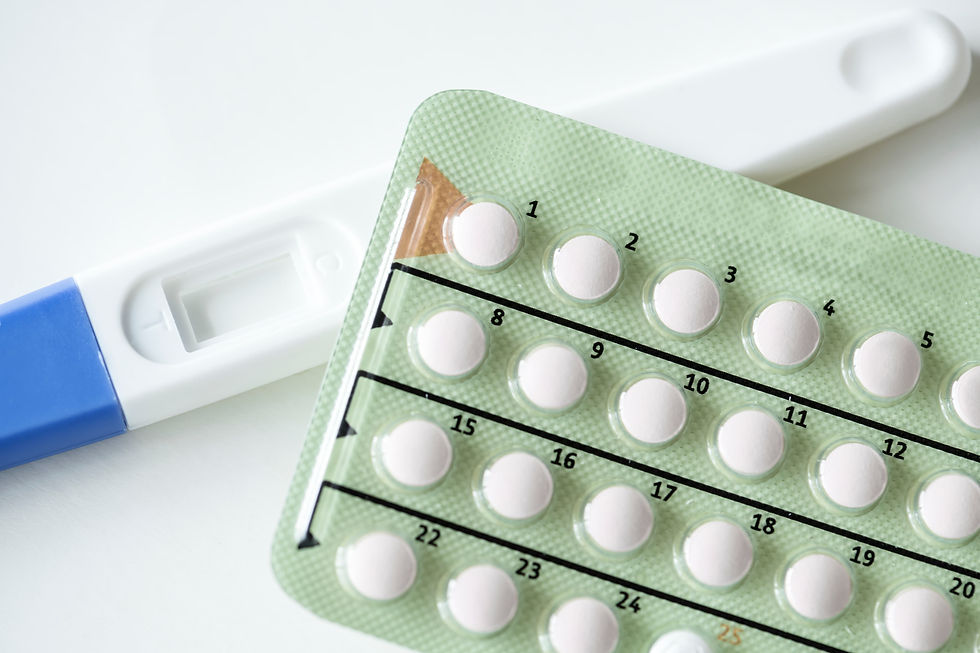
The situation is more common than most people admit: an unexpected moment, a contraceptive slip, or simply an instance of unprotected sex, and you find yourself reaching for the emergency contraceptive pill (ECP), that small but loaded tablet that promises a second chance at prevention. Maybe you have taken it once before, and it worked.
Maybe you are now wondering whether you can take it again this month, and whether doing so repeatedly carries risks, but your pharmacist was too rushed or too uncomfortable to explain properly.
These are not embarrassing questions. They are responsible ones, and they deserve straightforward, evidence-based answers rather than vague warnings or dismissive reassurances.
First, Understand What You Are Actually Taking...
Before answering the frequency question, it helps to understand what the emergency contraceptive pill actually is, because there is a persistent and consequential myth that it is simply a stronger version of a regular birth control pill taken after sex.
It is not. It is a fundamentally different use of hormones, operating at a different dose and a different mechanism than daily oral contraceptives. The most widely available ECPs globally, and by far the most common in India and South Asia, contain levonorgestrel, a synthetic progestogen, at a dose of 1.5 mg.
This is significantly higher than the progestogen dose in a standard daily contraceptive pill. When taken within 72 hours of unprotected sex (and with diminishing but still meaningful effectiveness up to 120 hours), levonorgestrel works primarily by delaying or suppressing ovulation, preventing the release of an egg so that sperm have nothing to fertilise. It does not end an existing pregnancy and is not an abortifacient.
A second type of ECP, ulipristal acetate (UPA), modulates how the hormone progesterone functions in the body, which also delays ovulation, and maintains consistent effectiveness across the full five-day window. It requires a prescription in most countries and is less widely available in India.
Understanding which type you have matters enormously for the frequency question, as the answers are genuinely different for each.
How Many Times Can You Take Contraceptive Pills in a Month?
For levonorgestrel-based pills (the i-pill, Unwanted 72, and most other over-the-counter ECPs in India), there is no strict medical limit on how many times you can take them within a single menstrual cycle or a calendar month in terms of acute safety. The WHO Medical Eligibility Criteria for Contraceptive Use lists no medical condition for which the risks of ECPs outweigh the benefits, and no deaths or serious complications have ever been causally linked to any ECP regimen.
A 2024 systematic review published in BMJ Sexual and Reproductive Health that examined the safety of repeated levonorgestrel ECP use within the same menstrual cycle found no evidence of severe adverse events or long-term harm from repeated doses.
That said, medical "not acutely dangerous" and "a good idea" are very different things, and this distinction is where most consumer-facing content fails its readers.
For ulipristal acetate (UPA), the guidance is more restrictive. UPA should only be taken once per menstrual cycle. Its mechanism of action, blocking progesterone receptors, means that taking it more than once in a cycle may interfere with its own effectiveness, and taking it alongside progestin-containing contraception can reduce the efficacy of both. This is a firm recommendation, not a soft guideline.
Why Frequent ECP Use Is Discouraged And What "Frequent" Actually Means?
The medical community's consistent, evidence-based reason for discouraging repeated ECP use is not primarily about the drug being dangerous to your body. It is about two more practical problems: it works less reliably than regular contraception, and it significantly disrupts your hormonal cycle the more you use it.
On effectiveness: a typical-use failure rate of 11 to 25 per cent makes ECPs a significantly less reliable pregnancy prevention tool than almost any method of regular contraception.
A daily combined oral contraceptive pill, used correctly, has a typical-use failure rate of around 7 to 9 per cent. A copper IUD has a failure rate of less than 1 per cent. Women who rely on ECPs as their primary contraceptive method face a pregnancy probability of 20 to 35 per cent within a year, according to a 2019 review, a risk that grows with each month of reliance.
The name itself is the clearest statement of intent: emergency contraception is designed for emergencies, not as a routine strategy.
On cycle disruption: every time you take a levonorgestrel ECP, you introduce a significant artificial hormonal event into your cycle. The pill works by delaying ovulation, which cascades into changes in the timing of your period; it may arrive earlier than expected, later than expected, or feel heavier or lighter than usual.
The more frequently ECPs are taken, the more chaotic the hormonal environment of your cycle becomes.
This does not cause permanent damage to your fertility, but it does mean your cycle becomes increasingly unpredictable, which itself becomes a source of anxiety and, ironically, makes it harder to accurately track whether you might be pregnant.
What Are The Side Effects of Repeated Contraceptive Pill Use?
Taking an ECP once produces side effects that are typically mild and short-lived: nausea, breast tenderness, headache, dizziness, and irregular spotting are the most commonly reported, and most resolve within a few days. These are your body's response to the hormonal spike, not signs of damage.
Repeated use compounds these effects. Women who take ECPs multiple times in close succession frequently report prolonged spotting or bleeding between periods, significantly irregular cycle lengths, persistent breast soreness, and headaches that are difficult to attribute to anything specific because the hormonal baseline is constantly shifting.
These are uncomfortable and disruptive without being medically catastrophic, but the quality-of-life cost of repeated use is real and frequently underestimated by women who are told only that ECPs are "safe."
One specific concern worth addressing directly: repeated use of levonorgestrel ECPs has been associated in some observational studies with a modestly increased risk of ectopic pregnancy if the ECP fails and pregnancy occurs, not with ectopic pregnancy as a direct effect of the drug. The mechanism is thought to involve the drug's effect on tubal motility. This is worth knowing, not to cause alarm; the absolute risk remains low, but as one more reason why relying on ECPs as a primary contraceptive is not a medically sound long-term strategy.
What is the Difference Between Emergency Contraceptive Pills and Regular Birth Control?
One of the most important conceptual gaps in how ECPs are understood, particularly by younger women who may reach for them repeatedly, is the difference in how they protect you compared to regular contraception.
A daily birth control pill, taken consistently, prevents pregnancy by maintaining a continuous hormonal environment in which ovulation simply does not occur, month after month. The protection is consistent, predictable, and cumulative. An ECP, by contrast, is a single large hormonal intervention timed to interrupt one specific ovulatory event in one specific cycle.
It does nothing to protect you from any subsequent unprotected sex, not the next day, not the next week, not even later the same day. The moment the ECP has done its work, you are as unprotected as you were before you took it.
This is the fundamental reason why frequent ECP use is medically discouraged: not because the drug itself is dangerous in the short term, but because it creates a false sense of ongoing protection where none actually exists, while delivering inferior pregnancy prevention compared to any consistent contraceptive method.
What You Should Do Instead?
If you find yourself reaching for an ECP more than once every few months, that pattern is your body's way of signalling that your current contraceptive situation deserves a more reliable solution. The options available in India in 2026 are broader and more accessible than many women realise.
A daily progestogen-only pill (mini-pill) or combined oral contraceptive pill can be started within days and provides reliable month-to-month protection once your cycle has stabilised after ECP use.
A copper IUD, which can itself be used as emergency contraception if inserted within five days of unprotected sex and then left in place, provides over 99 per cent protection for up to ten years with no hormonal side effects, making it the most effective option available for women who want reliable long-term contraception.
The hormonal implant and injectable contraceptives are additional long-acting options that remove the need for daily decision-making entirely.
None of these options requires the repeated hormonal disruption of frequent ECP use; all of them are more effective at preventing pregnancy, and any of them can be discussed with a gynaecologist or at a family planning clinic without judgment.
When to See a Doctor After Taking an ECP?
Two situations warrant a doctor's visit rather than simply waiting to see what happens. The first is if your period does not arrive within three to four weeks of taking the ECP, a pregnancy test is the right next step, and your doctor can confirm the result and discuss options if needed.
The second is if you experience unusual or severe abdominal pain in the weeks following ECP use, as this can occasionally be a sign of an ectopic pregnancy in the rare cases where the ECP does not work. Sharp, one-sided pelvic pain that is distinctly different from normal period cramping deserves prompt evaluation.
Conclusion
Taking an ECP more than once in a month is not acutely dangerous in the way that many women fear; no serious medical complications have been definitively linked to repeated levonorgestrel use, and the WHO places no medical restrictions on its use based on frequency alone.
However, "not dangerous" is a low bar. Repeated ECP use delivers unreliable pregnancy protection, progressively disrupts your menstrual cycle, and carries a compounding quality-of-life cost that routine contraception avoids entirely. UPA should be taken only once per cycle without exception.
And for anyone whose life circumstances are leading them to reach for emergency contraception repeatedly, the most genuinely helpful response is a conversation about more reliable, more comfortable, and more effective options, because you deserve contraception that works with your life, not a solution that only works for emergencies.
Disclaimer: This blog is for general informational purposes only and does not constitute medical advice. Please consult a qualified gynaecologist or healthcare professional for personalised contraceptive guidance.

Comments