
No Period After Stopping Pills? See How Long You Should Wait Before Consulting

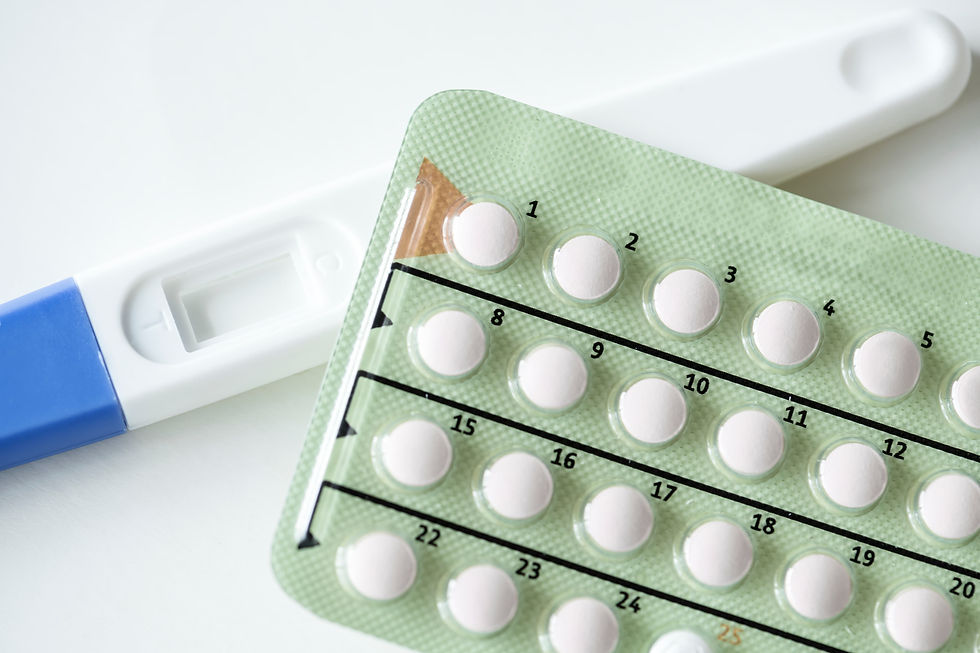
You have taken your last pill, packed away the blister pack, and now you are waiting. Maybe you are waiting to conceive. Maybe you simply want your natural cycle back. Either way, days pass, then weeks, and your period still has not shown up. The silence from your body feels louder with each passing day.
Here is the reassurance most women need to hear first: a delayed or absent period after stopping the birth control pill is extremely common, medically recognised, and in most cases, completely temporary. But "most cases" is doing a lot of work in that sentence, which is exactly why understanding the timeline, the biology, and the warning signs matters so much.
This guide gives you a clear picture of what is actually happening in your body, how long a wait is reasonable, and when it is genuinely time to pick up the phone and call your doctor.
First, Understand What the 'Period Pill' Was Actually Doing to Your Cycle
To understand why your period may be delayed after stopping the pill, it helps to understand what the pill was doing all along, because this surprises many people.
When you take a combined oral contraceptive pill (containing both oestrogen and progestogen), your body's own hormonal system is essentially placed on standby. The synthetic hormones signal to your hypothalamus and pituitary gland that there is no need to trigger ovulation, so your ovaries do not release eggs.
The bleeding you experience during your "pill break week" or placebo days is not a real period at all. It is called a withdrawal bleed, caused by the sudden drop in synthetic hormones when you stop taking the active pills for a week. Your uterine lining sheds not because of a natural ovulation-driven cycle, but simply in response to that hormone withdrawal.
This distinction, between a withdrawal bleed and a true period, is the key to understanding why things go quiet after you stop the pill entirely. A real period can only follow real ovulation. And for ovulation to happen, your hypothalamus, pituitary gland, and ovaries need to re-establish communication after being suppressed, sometimes for years. That hormonal "reboot" takes time.
Think of it like waking up a system that has been in sleep mode; it does not always come back online instantly.
The Expected Timeline: What Is Normal for Each Method?
The waiting window varies significantly depending on which type of hormonal contraception you were using, so understanding the typical recovery timeline for your specific method is important.
For combined oral contraceptive pills (the most common type), most women see their first natural period return within two to eight weeks after stopping. A broader range puts it at one to three months. The first cycle or two may be irregular in length, flow, or timing; this is the hormonal system finding its footing, not a sign that something is wrong.
For progestogen-only pills (the mini-pill), the return to ovulation and natural periods tends to be faster, often within four to six weeks, since these pills suppress ovulation less consistently than combined pills do.
For hormonal IUDs and implants, the return to normal cycles is usually rapid, within one to three months, because the localised or lower-dose hormones clear the system relatively quickly.
For contraceptive injections, the situation is meaningfully different. They’re specifically designed to suppress ovulation for a full three months per injection, and the hormone remains active in the body long after that window. It can take six to twelve months, and in some cases even longer, for natural periods to return after the last injection. This extended delay is well-documented and should be factored into planning, particularly if you are hoping to conceive soon after stopping.
What Is Post-Pill Amenorrhea?
The medical term for the absence of periods after stopping hormonal contraception is post-pill amenorrhea. It is formally defined as having no period for three months or longer after stopping the pill. It affects an estimated three to six per cent of women who stop taking combined oral contraceptives, making it genuinely common rather than alarming.
The mechanism is straightforward: some women's hypothalamic-pituitary-ovarian axis (the hormonal communication pathway between the brain and ovaries) takes longer than average to reactivate after a period of suppression.
This is particularly true for women who were on the pill for many years, women whose cycles were irregular before they started the pill, and women whose bodies are navigating additional stressors like significant weight changes or high cortisol levels.
It is important to understand that the pill does not cause long-term damage to your fertility. Post-pill amenorrhea is a delay in the restart of your natural cycle, not a sign that your reproductive system has been permanently affected. The vast majority of women see their cycles normalise within three to six months, even without any intervention.
Why Your Period Might Be Taking Longer And What Else Could Be at Play?
Several reasons beyond simple hormonal adjustment can extend the wait, and understanding them helps you ask the right questions if you do end up visiting a doctor.
A pre-existing condition that the pill was masking is the most clinically significant possibility. This is something many women do not realise: the pill can regulate and normalise cycles even when an underlying hormonal condition is present.
Conditions like PCOS (polycystic ovary syndrome) and thyroid dysfunction cause irregular or absent periods, but since the pill imposes a predictable bleeding pattern, those conditions go undetected for as long as the pill is taken.
When you stop, the underlying condition re-emerges, and suddenly your periods are irregular or missing again. In this case, the pill was not the solution; it was concealing a problem that still needs addressing.
Stress and significant lifestyle changes at the time of stopping the pill can also delay the return of ovulation. If you stopped the pill during an unusually demanding period of your life, career pressure, relationship changes, a move, disrupted sleep, or elevated cortisol can suppress the very hormonal signals your body needs to restart ovulation. The stress and the stopping of the pill compound each other.
Body weight and nutritional changes matter too. If you lost or gained a significant amount of weight around the time you stopped, or if you are eating in a caloric deficit, your body may delay ovulation as a protective response to perceived energy scarcity.
Is It Safe to Wait, or Should You Act Now?
Before you settle in to wait patiently, there is one important caveat that many women are not aware of: you can ovulate, and therefore become pregnant, before your first period returns after stopping the pill.
Ovulation always precedes a period by approximately two weeks. So if your body restarts ovulation quietly in the background, you could conceive without ever having seen a post-pill period.
If you are not actively trying to conceive and you are sexually active, use a barrier method from the day you stop your pills. A delayed period is not a reliable indicator of infertility; it simply means ovulation has not visibly announced itself yet.
When Should You Actually See a Doctor?
This is the question the blog title promises to answer, so here is a clear, practical framework rather than a vague "see a doctor if you're worried."
If you were on combined oral contraceptive pills or a hormonal IUD, see a doctor if your period has not returned within three months of stopping. If you were on contraceptive injections, the threshold extends to six months, given the longer-acting nature of those hormones.
You should see a doctor sooner, without waiting for these thresholds, if you are experiencing pelvic pain, unusual discharge, or any symptoms that might suggest pregnancy; if you had regular cycles before starting the pill but have had no period at all after stopping; if you are noticing other hormonal symptoms like significant hair loss, acne flares, unexpected weight changes, or nipple discharge (the latter can indicate elevated prolactin); or if you are over 35 and want to conceive, in which case earlier evaluation is simply wise reproductive planning.
At your appointment, expect blood tests checking key hormones including FSH, LH, oestrogen, prolactin, and thyroid function. An ultrasound may also be recommended to assess your ovaries for signs of PCOS and evaluate your uterine lining. These investigations are routine, non-invasive, and give a detailed hormonal picture within a few days.
Conclusion
Stopping the birth control pill sets off a hormonal reboot that most bodies complete smoothly within one to three months. A delayed period during this window is the rule, not the exception; it is your body taking the time it needs to rediscover its own rhythm after years of working from a synthetic script. However, a delay beyond three months for pill users, or beyond six months for injection users, is a clear signal to seek evaluation rather than continue waiting.
And if symptoms of an underlying condition like PCOS or thyroid dysfunction appear alongside the delay, earlier investigation is always the smarter path. Your menstrual cycle is not just a monthly inconvenience; it is a genuinely useful window into your hormonal health, and it is always worth understanding what it is telling you.
Disclaimer: This blog is for general informational purposes only and does not substitute for professional medical advice. Please consult a qualified gynaecologist or healthcare provider for personalised guidance.
Comments